Preventing Tea Staining: How to Design Stainless Steel for Coastal Areas
If you've recently installed high-quality stainless steel near the coast, only to notice reddish-brown spots appearing shortly after, you are experiencing a common phenomenon known as "Tea Staining." This is a major headache for architects and property owners worldwide. In this article, Trinity Dynamic explores the root causes of this issue and provides professional design and material selection tips to conquer the coastal environment.
What is Tea Staining? The Enemy of Coastal Architecture
Tea staining is not structural rust that will cause your building to collapse immediately. Rather, it is superficial cosmetic corrosion. It occurs when airborne sea salt (chlorides) reacts with moisture and oxygen on the surface of the stainless steel. This issue is highly prevalent within a 5-kilometer radius of the shoreline.
Primary Causes of Tea Staining:
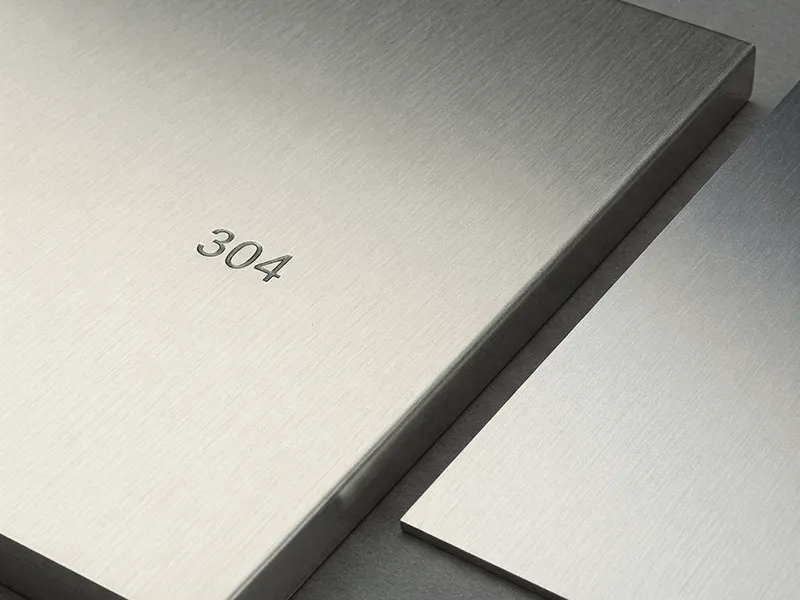
- Incorrect Grade: Using standard Grade 304 in high-chloride environments instead of marine-grade alloys.
- Rough Surface Finishes: Rough surfaces (like No.1 finish) create microscopic valleys where salt and moisture easily become trapped.
- Lack of Maintenance: Failing to wash away accumulated salt deposits with fresh water regularly.
- Poor Structural Design: Creating horizontal ledges or crevices where water can pool (unwashed areas).
3 Design Secrets for Rust-Free Coastal Stainless Steel
1. Surface Finish Matters Most
Beyond upgrading to Marine Grade 316, the smoothness of the steel is critical. The golden rule is: "The smoother the surface, the harder it is for salt to stick."
- We highly recommend using smooth 2B Finish Plates or highly polished Mirror (No.8) Finishes for exterior architecture.
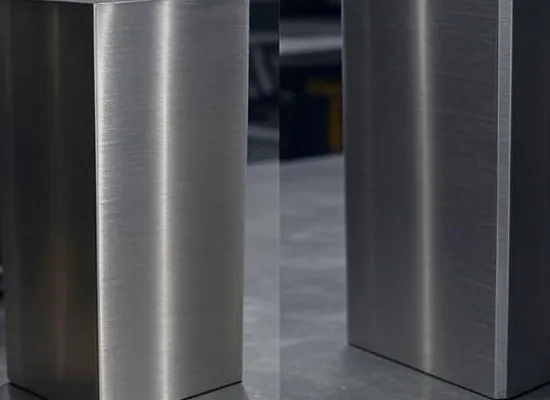
- If using a brushed finish like Hairline (HL), ensure the grain direction is vertical. This allows rain to easily wash the salt down and off the structure.
2. Avoid Water Traps (Crevices)
Good coastal design eliminates areas where saltwater can accumulate. Ensure all joints are angled for easy drainage. If welding is required, all welds should be ground down and polished as smoothly as possible to prevent microscopic moisture traps.
3. Specify the "L" Grade for Welding
If your coastal structure requires welding, you must specify 316L (Low Carbon). The "L" grade prevents carbon precipitation during the welding process, eliminating the risk of Weld Decay—which is often the first point of attack for coastal corrosion.
Basic Maintenance for Coastal Metals
Even the highest-grade marine stainless steel requires some care (it is low-maintenance, not maintenance-free). The simplest and most effective way to prolong its pristine appearance is to wash the surface regularly with clean, fresh water—at least once a month—to remove airborne salt crystals before a chemical reaction occurs.
Need Premium Marine Grade Stainless?
Trinity Dynamic stocks Dual Certified 316/316L stainless steel in various finishes, including Mirror, BA, and 2B, perfect for coastal architecture. Every purchase is backed by genuine Mill Test Certificates.
Request a Quote & Expert Advice