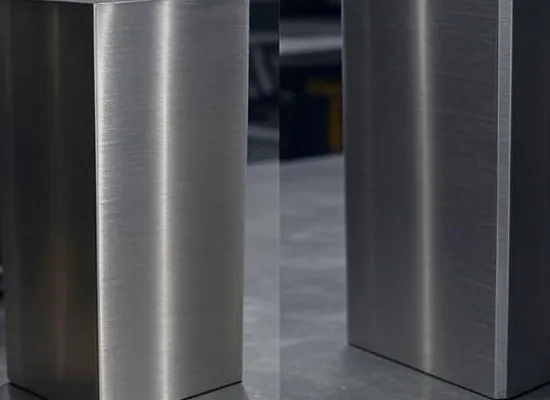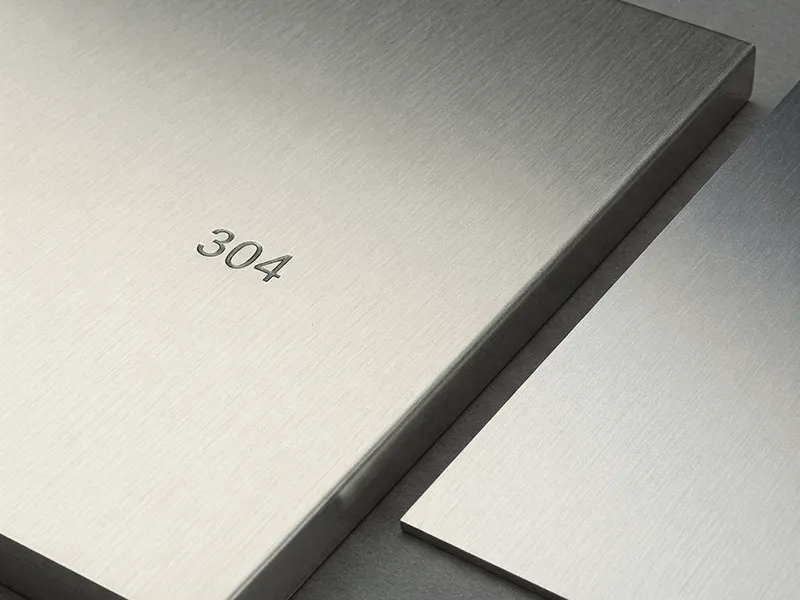
There is a deeply rooted misconception in the industry that "true stainless steel is non-magnetic." This myth causes frequent disputes on job sites when contractors test materials with a magnet and it sticks! In metallurgical reality, several high-quality industrial stainless steel grades are highly magnetic! Trinity Dynamic dives deep into the "magnetic properties" of stainless steel so you don't miss out on great materials due to old myths.
Is Grade 304 Stainless Steel Magnetic?
Grades 304 and 316 belong to the Austenitic family, which has a molecular structure that is naturally non-magnetic. Therefore, a flat, unworked sheet of 304 straight from the mill will not attract a magnet.
So Why Does 304 Stick to a Magnet on Site?
When Grade 304 is subjected to Cold Working—such as bending, deep drawing, stamping, or even severe cutting—the crystal structure in the affected area transforms partially into "Martensite." Martensite is highly magnetic. As a result, Grade 304 can become slightly magnetic at the bends or worked edges. This is a completely normal engineering phenomenon and does not mean the stainless steel is "fake" or of low quality.
Meet the 3 Naturally Magnetic Stainless Steel Families
Aside from cold-worked 304, there are entire families of stainless steel born to be magnetic, offering unique benefits that 304 cannot provide:
1. Ferritic - The Economical Choice
This group contains little to no nickel, making it 100% magnetic.
- Popular Grades: 430, 409
- Key Benefits: Excellent thermal conductivity, high resistance to stress corrosion cracking, and significantly cheaper than 304.
- Applications: Refrigerator panels, washing machine drums, automotive exhausts.
2. Martensitic - Hardness and Sharpness
High carbon content allows this group to be "Heat Treated" just like carbon steel. It is strongly magnetic.
- Popular Grades: 420J2, 440C
- Key Benefits: The highest hardness and wear resistance among stainless steels.
- Applications: Knife blades, surgical instruments, machine shafts.
3. Duplex - The Super Alloy
A hybrid structure containing 50% austenite and 50% ferrite, which makes it magnetic.
- Popular Grades: 2205, 2507
- Key Benefits: Twice as strong as 304 and offers supreme resistance to seawater and chloride corrosion.
- Applications: Offshore oil rigs, high-pressure chemical tanks.
Summary Table: Magnet Test = Fake?
| Stainless Type | Magnetic Property | The Truth |
|---|---|---|
| 304 / 316L (Flat Sheet) | Non-Magnetic | Austenitic base structure is inherently non-magnetic. |
| 304 / 316L (Bent/Stamped/Worked) | Slightly Magnetic | Structure partially changes to Martensite during Cold Working. |
| 430 (Ferritic) | Strongly Magnetic | Genuine, economical stainless steel ideal for indoor use. |
| 420 (Martensitic) | Strongly Magnetic | Genuine, hardenable stainless steel ideal for blades and shafts. |
Stop Using Magnets to Test Stainless Steel!
A magnet cannot definitively tell you if stainless steel is genuine. Trinity Dynamic recommends verifying materials strictly through a Mill Test Certificate (MTC) or chemical spot tests. Contact us for certified materials.
Consult Sales & Get a Quote